Apollo Built People First
In 1961, President John F. Kennedy committed the United States to landing a person on the Moon and returning that person safely to Earth. At that moment, the spacecraft, launch vehicles, procedures, mission-control systems, and much of the required knowledge were still unfinished (NASA's Apollo 11 history).

NASA did not wait for a completed lunar machine and then look around for people who might know how to fly it. The agency selected its second astronaut group, including Neil Armstrong, in 1962, more than five years before the first integrated flight of the Saturn V and six years before the first crewed Apollo mission (NASA's astronaut-selection history).

Astronauts, engineers, flight controllers, and mission planners learned while the hardware was still being invented. They used simulators, mockups, survival training, technical assignments, and increasingly realistic rehearsals. People, procedures, spacecraft, launch systems, and mission control were built together.

Apollo did not succeed because NASA bought impressive equipment, and it did not succeed because it trained people in a classroom far from the work. It succeeded because a mission forced human capability and technology to mature side by side. Leadership, practice, and judgment were not accessories to the machines. They were part of the system.

That is the lesson Rapid Up-skilling takes from Apollo. Organizations do not need a finished technology stack before they can teach their people new knowlege about systems thinking, safety, evaluation, teamwork, and the habits of disciplined practice. Organizations do need a real mission, realistic rehearsal, and people who will be accountable when the work becomes operational.
Technology Acquisition Is Not Impact
If Apollo shows how to prepare people while a technology is still emerging, electrification shows what happens when the technology arrives and the people, processes, and leadership lag behind.

Electric power did not transform manufacturing as soon as factories gained motors and wires. Many plants simply attached electric motors to production systems still designed around steam. The largest productivity gains came later, when leaders redesigned factory layouts, materials handling, production methods, management practices, and jobs around what electricity made possible (Paul David, American Economic Review).

The invention mattered. The invention alone was not the transformation. Impact arrived when human leadership reorganized work.

That is the quieter warning inside every technology boom. A system can pass its technical tests and still fail to change the world, because no one has yet done the harder work of applying it with skills.
Beyond AI Models
Agentic AI is now creating the same kind of moment. These systems can do more than generating texts. They can plan tasks, call tools, retrieve knowledge, coordinate workflows, and take actions. An organization that simply buys an agent platform has not yet acquired the ability to use it well. It still needs people who can design agent architecture, orchestrate multi-step work, integrate data, evaluate performance, monitor production systems, govern risk, and keep human oversight where it belongs.

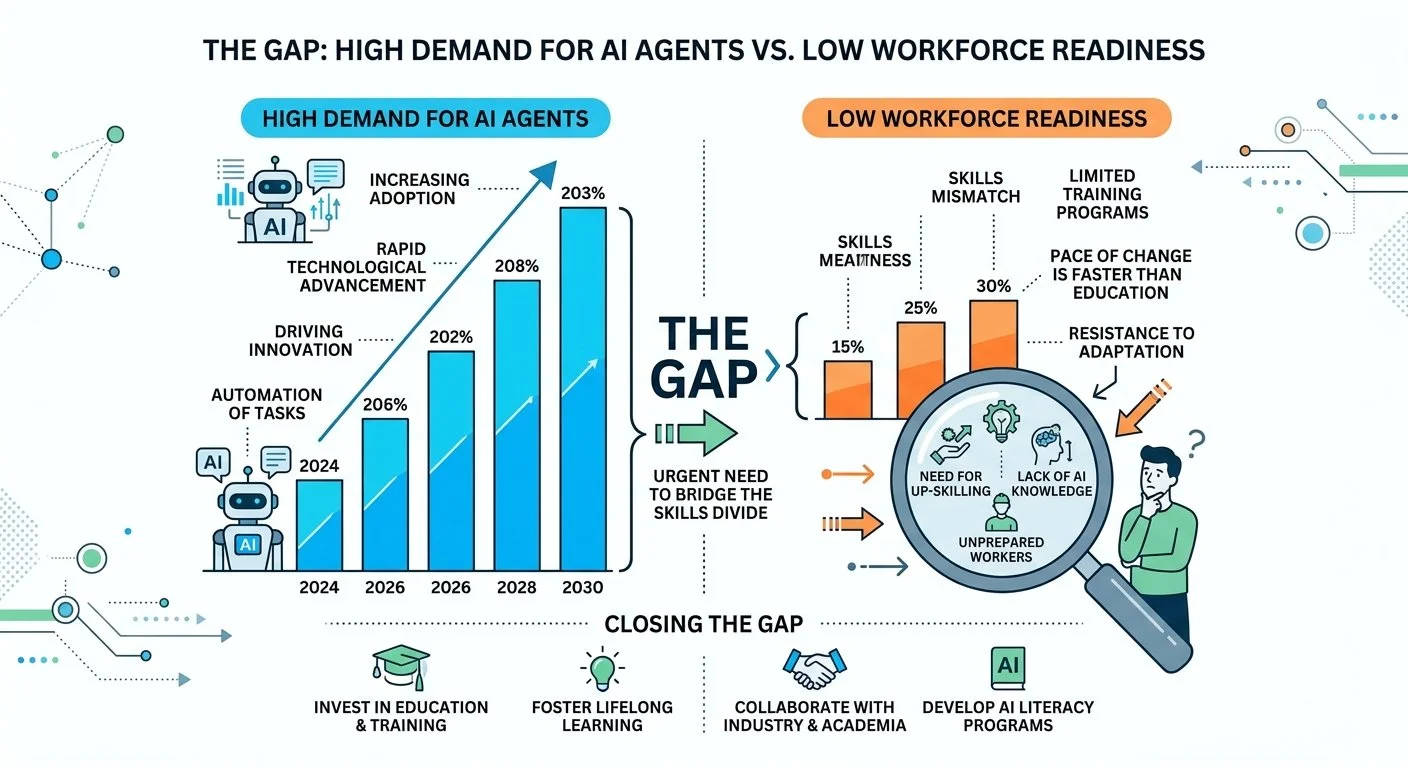
The labor market is already moving. LinkedIn identified AI Agents as its fastest-growing AI skill of 2025, with members adding the skill more than 70 times faster than one year earlier (LinkedIn AI Labor Market Update). Stanford's 2026 AI Index documented sharp growth in U.S. job postings that mention agentic systems, AI agents, agentic AI, and related frameworks (Stanford HAI AI Index 2026). CompTIA, meanwhile, found that only 34 percent of surveyed business and technology professionals described themselves as moderately or very familiar with AI agents or agentic AI, while 46 percent reported little or no familiarity (CompTIA AI Skills Tracker).

Demand is rising faster than broad workforce readiness. The shortage is not a shortage of people who have tried a chatbot. It is a shortage of trained agentic AI professionals: people who can design, evaluate, secure, and supervise these systems in real work.

That gap helps explain a second pattern. Individual experimentation does not automatically become organizational value. McKinsey's 2026 research found that many respondents reported personal productivity gains from AI, yet far fewer reported enterprise-level financial impact. The small group identified as AI high performers was more likely to redesign workflows, define human oversight, manage risk, track performance, and plan workforce changes (McKinsey, The State of AI in 2026).

Rapid Up-skilling concentrates first on durable capabilities, architecture, evaluation, security, governance, and judgment, then updates product-specific skills through short learning cycles as tools change. The aim is not to guess which platform will dominate. The aim is to prepare people who can learn new systems quickly, test them rigorously, and apply them responsibly.
Crew Scaler's global cohort
Crew Scaler, a U.S. 501(c)(3) nonprofit organization, is preparing a global learning cohort as a concrete expression of the stated strategy. The program is for motivated professionals who want to study agentic AI in depth and prepare for the NVIDIA-Certified Professional: Agentic AI (NCP-AAI) examination.

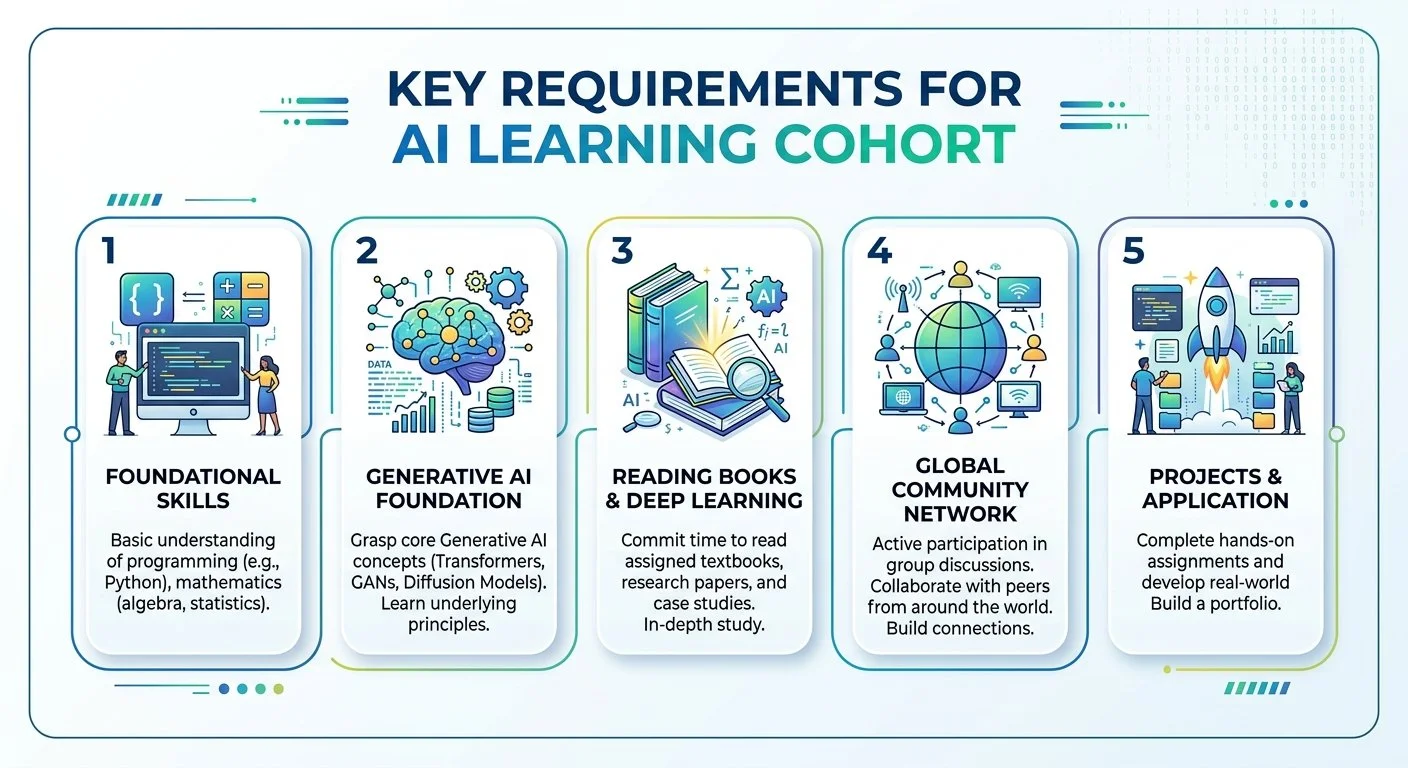
The initiative reflects Crew Scaler's commitment to the global up-skilling challenge and the shortage of trained agentic AI professionals. It is open to applicants worldwide.  Crew Scaler is looking for learners who:
- Have a good foundation in generative AI
- Are motivated to prepare for and take the NCP-AAI examination
- Can read and understand technical textbook materials in English
- Can participate constructively in discussions in English
- Bring a positive attitude and a willingness to help other learners
- Can read and understand at least three chapters per week
- Will complete quizzes and participate consistently in community discussions

This will be a learning community. Participants will study, question, discuss, practice, and support one another. The purpose is not only to prepare individuals for an examination. It is to develop a network of professionals who can help organizations apply agentic AI with competence, responsibility, and confidence.

The cohort is an independent Crew Scaler initiative. It is not affiliated with, authorized by, sponsored by, or endorsed by NVIDIA.
Join Us !
If you have a strong foundation in generative AI, want to prepare for NCP-AAI, and are willing to do serious weekly study in a global community, Crew Scaler wants to hear from you.

Register your interest as a learner

Crew Scaler is also seeking organizations, educators, researchers, professional communities, and workforce-development leaders who want to help the initiative grow.

Partners can help introduce the program to motivated learners, collaborate on instructional design, explore responsible research based on program activities and insights, and establish local agentic AI communities. Research participation is for organizations and researchers that want to collaborate formally with Crew Scaler. Privacy, consent, and data-governance protocols will be developed before any research activities begin.

A global program becomes more valuable when shared knowledge takes root in local networks, professional relationships, and continued peer support. Crew Scaler is looking not only for partners who can promote one cohort, but for partners committed to growing long-term agentic AI capability in their communities.

Register your interest as a partner